
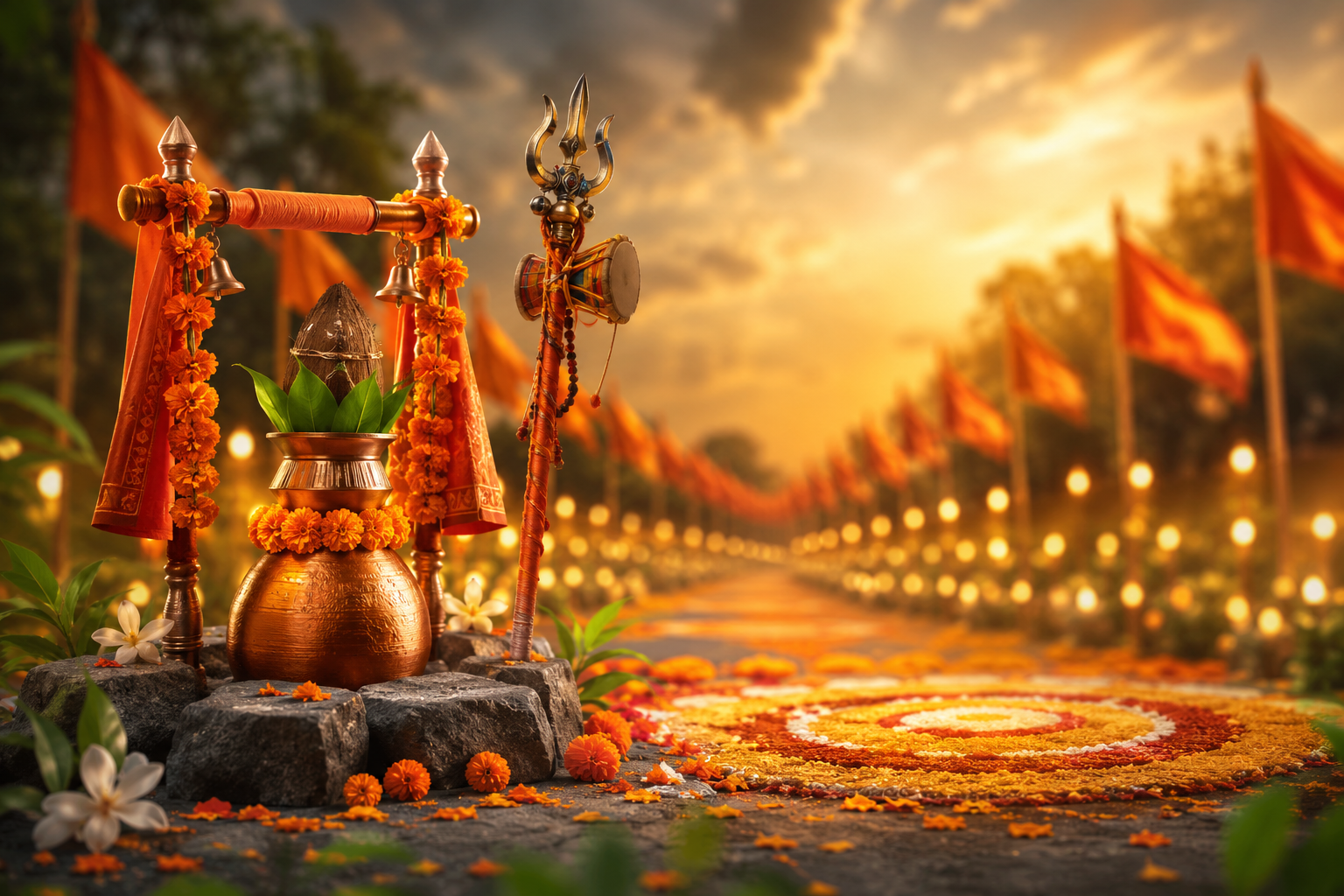
Kids Kawad Yatra & Corporate Kawad Marathon: The Ultimate Guide to Planning Memorable Spiritual & Cultural Events
A Kawad Yatra is more than a religious gathering. It can bring together faith, community, culture, movement and shared participation in a way that creates lasting memories. When planned for children, the experience can introduce younger participants to cultural traditions in an engaging setting. When organised for a company, a Kawad Marathon can create a different kind of group experience, bringing employees together around a shared spiritual and cultural theme.
However, organising such an event involves much more than choosing a date and gathering participants. A successful Kids Kawad Yatra Event or Corporate Kawad Marathon needs thoughtful planning, suitable decoration, participant coordination, clear communication, comfortable arrangements and careful attention to safety. The event environment also matters because the surroundings help establish the mood from the moment guests arrive.
This is where event decoration and event management work together. A well-planned setting can make a spiritual event feel welcoming, meaningful and visually connected to its purpose without taking attention away from the cultural experience itself. From entrance decoration and stage arrangements to themed areas, participant zones and photo points, every visual element can contribute to the atmosphere.
For schools, businesses and community groups considering a Kawad Yatra event, the first question is often simple: how can the event feel meaningful while remaining enjoyable and well organised for everyone involved? The answer starts with understanding the audience, the purpose of the event and the practical requirements before choosing the decoration or entertainment.
Why Kids Kawad Yatra Events Are Becoming a Meaningful Cultural Experience
A Kids Kawad Yatra Event needs a different approach from an adult religious gathering. Children need an environment that feels welcoming, easy to understand and enjoyable while respecting the spiritual purpose of the occasion. Schools, community organisations and families can use such events to introduce children to cultural traditions through participation rather than simply observation.
The planning should begin with the age group and the nature of participation. Younger children may need shorter activities, more supervised movement and frequent rest opportunities, while older children may be able to take part in longer walks or structured group activities. The route, timings, gathering point and activity areas should therefore be considered before the decorative theme is finalised.
A good Kids Kawad Yatra can combine cultural learning with simple activities that keep children interested. Traditional music, devotional performances, creative decoration, storytelling, group chants and themed activity areas can help create an experience that feels appropriate for the occasion. The aim is not to turn a spiritual gathering into an ordinary entertainment programme. Instead, the activities should support the central cultural theme.
The visual setting also plays an important role. Children respond strongly to colour, shape, movement and recognisable themes. A thoughtfully decorated entrance can create excitement before the event begins, while a dedicated stage or activity backdrop can provide a clear focal point. Traditional motifs, flowers, appropriate religious symbols and cultural colours can be used with care so that the decoration supports the character of the event.
Participant identity can also add to the experience. Matching T-shirts can help children feel part of one group and make the event visually cohesive. Kalakriti Events provides free T-shirts for participants as part of the event experience, which can add a practical and memorable element to a Kids Kawad Yatra. For schools and community groups, coordinated clothing can also make group movement easier to recognise during a busy event.
Yet T-shirts should not be treated only as promotional material. Comfort matters, particularly when children will be moving or spending time outdoors. The fabric, sizing and fit should be suitable for the expected weather and duration of participation. Parents and organisers should also have clear information about what children should wear, what they should carry and where they should meet their group.
The same principle applies to the event schedule. Children may enjoy a lively beginning, but a long programme without breaks can quickly become tiring. A well-paced Kids Kawad Yatra can include periods for gathering, cultural activities, the main Yatra, refreshments, rest and closing celebrations. Each stage should have a clear purpose so children remain engaged without feeling overwhelmed.
Parents and teachers also need to know what to expect. Communication before the event can explain the meeting point, timings, dress requirements, emergency contact arrangements and collection procedure. For school-led events, assigning teachers or responsible adults to specific groups can make supervision easier.
The physical layout deserves equal attention. An event decoration plan should consider where children will enter, where parents or teachers will wait, where the main gathering will take place and where refreshments will be served. Decoration should never block movement or create unnecessary obstacles. A visually impressive setup is useful only when people can move through the venue comfortably.
This is why Kids Kawad Yatra planning needs both creativity and practical thinking. The most memorable events are not always those with the largest decorations. They are often the ones where the theme, activities, setting and participant experience work together naturally.
How to Plan a Corporate Kawad Marathon That Employees Will Remember
A Corporate Kawad Marathon or Office Kawad Marathon can give companies an opportunity to bring employees together through a cultural and spiritual experience. Unlike a conventional corporate event, the focus is not simply on networking, presentations or entertainment. It can create a shared experience based on participation, community and cultural connection.
The first step is to establish what the company wants the event to achieve. Some organisations may want to mark a religious or cultural occasion, while others may be looking for a meaningful employee engagement activity. The difference matters because it influences the event format, communication style, decoration and activities.
An Office Kawad Marathon can be designed around participation rather than competition. Employees can walk together as a group, take part in devotional activities and enjoy a cultural programme before or after the main Yatra. This approach can make the event accessible to people with different levels of fitness and different roles within the organisation.
Planning the route is one of the most important considerations. Organisers should understand the distance, expected duration, starting and ending points, access requirements and available facilities. The number of participants should also influence the layout. A small office group may require a simple arrangement, while a large corporate group needs clearly defined gathering and movement areas.
The event schedule should allow employees to understand what happens at each stage. A clear start time, assembly point and programme sequence can reduce confusion on the day. Internal communication through email, employee groups or company communication channels can help participants prepare before arriving.
The visual identity of the Corporate Kawad Marathon can also make a major difference. Corporate events often need a balance between company identity and the cultural character of the occasion. Branding can be included in suitable areas without overpowering the spiritual theme. The entrance, stage, backdrop and participant areas can carry a consistent visual concept while keeping the cultural purpose at the centre.
Free T-shirts can add another layer to the experience. When every participant receives the same T-shirt, the group immediately develops a shared identity. Employees who may rarely interact during normal office routines can feel part of the same team during the event. A common T-shirt can also make group photographs more distinctive and give participants something tangible to remember the occasion.
The T-shirt design can reflect the event rather than turning it into an advertising item. A simple spiritual or cultural design, event name and appropriate company identity can be enough. Comfort should remain important because participants may wear the T-shirt during walking activities and for several hours.
The decoration should follow the same principle. A corporate spiritual event does not need to look like a conference. It can use flowers, traditional patterns, devotional elements, lighting, fabric, thematic backdrops and cultural motifs to create an atmosphere suited to the occasion.
The entrance deserves particular attention because it creates the first impression. A decorated entrance can establish the event theme immediately and provide a natural transition from the everyday workplace environment into the event setting. Depending on the venue, this could involve floral arrangements, traditional decorative elements, thematic signage or a structured welcome area.
The main stage or gathering area can then become the visual centre of the event. It may be used for prayers, cultural performances, speeches, music or other planned activities. The backdrop should remain clear enough for people to see the programme while also working well for photographs.
Photography is increasingly important at cultural and corporate events because participants often share their experiences through digital channels. A dedicated photo area can therefore be useful. It should look connected to the overall theme rather than appearing as an unrelated decoration. This creates an opportunity for employees to take group photographs and preserve memories of the event.
At the same time, organisers should avoid making the event feel like a marketing exercise. Employees are more likely to value the experience when the cultural purpose remains genuine. Corporate branding should support the event rather than dominate it.
The Role of Spiritual Event Management in Creating a Complete Experience
Spiritual Event Management involves much more than decoration. It requires an understanding of how people move, gather, participate and experience an occasion. A spiritual event may involve rituals, music, cultural performances, group activities, food arrangements, stage programmes and large numbers of participants. Each part needs to fit into the wider event plan.
For a Kids Kawad Yatra, this means creating an environment where children can participate comfortably while adults can supervise them. For a Corporate Kawad Marathon, it means creating an organised experience where employees know where to go, what to expect and how the programme will progress.
Decoration becomes one part of this wider experience. Its purpose is to create atmosphere, define spaces and strengthen the theme. Good decoration does not need to compete with the event itself. Instead, it can guide attention towards important areas and make the venue feel connected to the occasion.
For example, a spiritual entrance can introduce the theme before guests reach the main area. A decorated stage can create a focal point for prayers and performances. A separate participant zone can help groups assemble before the Yatra begins. A photo area can provide a place for families, children or employees to capture memories.
The choice of materials also matters. Outdoor spiritual events may face heat, wind, dust or rain, depending on the season and location. Decorative structures should therefore be selected with the venue and weather conditions in mind. Fabric, flowers, lighting, props and other elements need to be positioned carefully so that they remain suitable for the environment.
Lighting can transform the atmosphere, particularly when an event continues into the evening. Warm decorative lighting can add depth to an entrance or stage, while focused lighting can help important areas remain visible. Lighting should support movement and visibility rather than create glare or confusion.
Sound also needs consideration. Devotional music, announcements and performances should be audible without becoming uncomfortable for participants. For a children’s event, the volume and duration of amplified sound should be appropriate for the age group and venue.
The event layout should also leave sufficient room for movement. This is especially important during a Kawad Yatra because participants may move together from one area to another. Decorative installations should not narrow pathways unnecessarily. Stages, props, cables, stands and other equipment should be placed with movement in mind.
A professional event organiser can bring these elements together by considering the complete participant journey. What does someone see when they arrive? Where do they register or gather? Where do they receive their T-shirt? Where does the Yatra begin? Where can they rest? Where does the programme finish? These questions may appear simple, but answering them before the event can prevent confusion later.
Creating Spiritual and Corporate Cultural Events That Feel Different
Modern cultural events do not have to choose between tradition and contemporary presentation. A well-designed spiritual event can respect cultural values while still offering a fresh and visually engaging experience.
For schools, this might mean combining a Kids Kawad Yatra with storytelling, traditional music, creative activities and a simple cultural programme. The decoration can use familiar motifs while introducing colourful and engaging elements that appeal to younger participants.
For corporates, the same cultural foundation can be presented in a more structured way. An Office Kawad Marathon could include a group welcome, devotional programme, shared walk, cultural performances and a closing gathering. The decoration can reflect both the spiritual occasion and the organisation’s identity without making either one feel out of place.
Community events can take another direction. They may bring together families, local groups, schools, businesses and cultural organisations. In this setting, the decoration can help create shared spaces where different groups feel included.
The key is to avoid treating every event in the same way. A children’s event should not simply be a smaller version of an adult event. A corporate Kawad Marathon should not feel like a standard office function with religious decoration added to it. Each audience has different expectations, and the planning should reflect those differences.
This is also why event decoration should begin with the event concept rather than a collection of decorative items. Instead of asking which backdrop or stage design looks attractive, organisers should first decide what the event should feel like. Once the purpose is clear, the decoration can be developed around it.
A strong theme can influence the entrance, stage, participant T-shirts, photo area, colours, floral arrangements and other visual details. This creates a consistent experience without requiring every part of the venue to look identical.
For a Kids Kawad Yatra, the theme could focus on cultural learning, devotion and togetherness. For a Corporate Kawad Marathon, it could focus on unity, community and shared participation. The same spiritual foundation can therefore produce two very different event experiences.
The role of the organiser is to understand this difference and turn it into a practical plan. This involves discussing the audience, venue, number of participants, event duration, activities, decoration requirements and programme flow before work begins.
Planning Safety, Comfort and Crowd Movement
The excitement surrounding a Kawad Yatra should never replace careful planning. Whether the participants are children, employees or members of a wider community, safety and comfort need to remain central to the event.
Children require particular attention. Schools and organisers should maintain clear supervision arrangements and make sure every child knows which group they belong to. Adults responsible for groups should have access to important contact details and clear instructions about what to do if a child becomes separated from the group.
The venue should also have clearly understood entry and exit points. If a large number of people are expected, organisers should avoid creating a single narrow access route. Clear movement patterns can help prevent unnecessary crowding.
Rest and hydration are equally important, especially during outdoor activities. Weather conditions should influence the event timing, clothing advice and arrangements for shade or rest. Children and adults may have very different physical needs, so the programme should not assume that every participant can maintain the same pace.
The event route should be checked in advance. Organisers should consider road crossings, pedestrian movement, traffic conditions, public access and points where participants may need to stop. Where permissions or local arrangements are needed, these should be addressed well before the event.
First aid arrangements should also be considered. The exact provision will depend on the size and nature of the event, but organisers should know where help can be found and who is responsible for responding to an incident.
These details may not appear in photographs after the event, but they have a major effect on the participant experience. Good event planning is often noticed most when something goes wrong. Clear arrangements can help organisers respond quickly instead of trying to make decisions under pressure.
Decoration also has a safety role. Structures should be stable, electrical equipment should be positioned appropriately and walkways should remain clear. Decorative items should never create avoidable trip hazards or block emergency access.
How Kalakriti Events Can Support Different Types of Kawad Events
An event such as a Kids Kawad Yatra or Corporate Kawad Marathon brings together several different requirements. The event needs a concept, a suitable visual setting, participant arrangements, decoration, programme coordination and attention to the practical details that keep everything moving.
Kalakriti Events’ event decoration service can form part of this wider experience by helping create a setting that matches the purpose of the occasion. The decoration can be planned around the type of audience, venue and theme rather than using the same design for every event.
For a Kids Kawad Yatra, the approach can focus on creating a colourful, welcoming and culturally meaningful environment. Decorative elements can help define the entrance, activity spaces and main programme area while keeping the surroundings suitable for children.
For an Office Kawad Marathon, the visual concept can bring together corporate identity and spiritual elements in a balanced way. The event can include coordinated participant T-shirts, a themed entrance, stage decoration, group photo areas and other visual details that make the occasion feel special without turning it into a conventional corporate promotion.
The availability of free T-shirts can also contribute to group identity. Participants can arrive wearing a common event T-shirt, helping create a sense of togetherness from the start. For children’s groups, this can make participants easier to recognise. For corporate teams, it can create a shared visual identity during the Kawad Marathon.
The wider value of event management lies in bringing these details together. An event should not feel like separate suppliers have created separate pieces. The entrance, stage, participant areas, T-shirts and programme should feel connected to one idea.
This is particularly important for spiritual and cultural events because authenticity matters. Decoration should respect the significance of the occasion while still creating an attractive environment. The best results come from understanding the event first and designing around that understanding.
For anyone searching for the best Kawad Yatra event management company in India, it is worth looking beyond decoration alone. Ask how the event concept will be developed, how the audience will be considered, how participant movement will be handled, what is included in the event experience and how the visual elements will support the purpose of the occasion.
A good event plan should answer these questions before the decorative work begins.
Making a Kawad Yatra Event Memorable for the Right Reasons
A memorable Kawad Yatra does not depend on how much decoration is used or how large the event becomes. It depends on whether participants feel involved in the experience.
For children, this may be the excitement of receiving a T-shirt, joining friends, taking part in cultural activities and walking together as a group. For employees, it may be the chance to step away from the usual office routine and share a meaningful experience with colleagues.
For families and communities, it can be the atmosphere created when people come together around a common cultural purpose. The decoration, music, activities and group participation can all contribute to that feeling.
The most effective event planning therefore starts with people rather than products. Before choosing a stage design, organisers should understand who will attend. Before deciding the programme, they should consider how participants will move through the day. Before selecting decorations, they should understand the venue and the event’s cultural purpose.
This people-first approach also helps with search intent. Someone looking for “Kids Kawad Yatra” may want ideas for organising a school or children’s event. Someone searching for “Corporate Kawad Marathon” may want guidance on employee participation and event planning. A person searching for “Spiritual Event Management” may be looking for a complete approach that covers the setting, programme and participant experience.
Answering these questions naturally within one well-planned event is more valuable than simply adding keywords to a page.
A Kids Kawad Yatra and a Corporate Kawad Marathon may appear very different at first. One is designed around children and cultural learning, while the other is built around employees and corporate participation. Yet both depend on the same foundation: a clear purpose, thoughtful planning, suitable decoration, comfortable participation and careful coordination.
When these elements work together, a Kawad Yatra becomes more than a scheduled activity. It becomes an experience that people can remember, discuss and share long after the event has ended.
For schools, corporates and communities planning their next spiritual or cultural gathering, the best place to begin is not with the decoration catalogue. Start with the people, the purpose and the experience you want them to have. Once those decisions are clear, the right event format, programme, decoration and participant arrangements become much easier to develop.
At Kala Kriti Events, we provide professional Spiritual Event Management for Kids Kawad Yatra Events, Corporate Kawad Marathons and meaningful cultural gatherings. We handle the event setup with thoughtful decoration, coordinated arrangements and free T-shirts, helping schools, businesses and communities create an engaging and memorable experience for every participant.