
Traditional House Warming Decoration Ideas Inspired by Indian Culture
Turn Your House Warming Celebration into a Truly Unforgettable Occasion
A new home represents more than just walls, doors, and a roof. It is a place where memories are created, families grow, and dreams take shape. Across India, entering a new home is celebrated with a house warming ceremony, often known as Griha Pravesh. This occasion holds deep cultural and spiritual significance and is considered one of the most important milestones in family life. Alongside prayers and rituals, house warming decoration plays a vital role in creating an atmosphere of positivity, celebration, and togetherness.
Traditional house warming decoration continues to hold a special place in Indian culture because it blends beauty with meaning. Every flower, colour, lamp, and decorative element has a purpose beyond appearance. These decorations reflect values that have been passed down through generations and help transform an empty house into a warm and welcoming home. Even in today’s modern world, families continue to embrace traditional decoration ideas because they create a connection with cultural roots while adding elegance and charm to the celebration.
Many people searching for house warming decoration ideas want inspiration that feels authentic rather than overly commercial. They want decorations that honour Indian traditions while creating a memorable experience for family and guests. The beauty of traditional Indian decoration lies in its versatility. Whether the ceremony takes place in a large independent house, a modern apartment, or a compact city flat, cultural décor elements can be adapted to suit any space.
Traditional house warming decoration is not simply about making a property look attractive. It is about creating an environment filled with warmth, positivity, and blessings. It welcomes loved ones into the new home and symbolises hope for a prosperous future. Understanding the cultural significance behind these decorative elements can help homeowners create celebrations that feel meaningful and memorable.
Why Traditional House Warming Decoration Remains Timeless
Indian traditions place strong emphasis on the energy and atmosphere of a living space. For centuries, families have believed that a thoughtfully decorated home attracts positive energy and creates a harmonious environment for those who live there. Traditional house warming decoration is deeply connected to these beliefs and continues to be valued across different regions of the country.
One reason traditional decoration remains popular is its ability to bring families together. Preparing for a Griha Pravesh ceremony often involves the participation of multiple generations. Grandparents share traditional practices, parents coordinate preparations, and younger family members contribute creative ideas. The process itself becomes a meaningful experience that strengthens family bonds and creates lasting memories before the celebration even begins.
Another reason for its enduring popularity is the symbolic value associated with each decorative element. Unlike purely decorative themes that focus only on appearance, traditional Indian décor combines visual appeal with cultural meaning. Flowers symbolise prosperity and purity. Lamps represent knowledge and positivity. Rangoli designs welcome good fortune. Mango leaves signify abundance and growth. Every detail contributes to a larger cultural narrative.
Traditional decorations also create a sense of warmth that guests immediately notice when they enter a home. The fragrance of fresh flowers, the glow of lamps, and the vibrant colours of ceremonial décor help create an inviting atmosphere that encourages celebration and togetherness. These sensory experiences make the event feel more personal and memorable.
As homeowners increasingly seek meaningful experiences rather than temporary trends, traditional house warming decoration continues to resonate. It offers a sense of authenticity that many modern decorative themes struggle to achieve. Rather than following changing fashions, traditional décor remains rooted in values, culture, and family traditions that stand the test of time.
The Importance of Entrance Decoration in Indian House Warming Celebrations
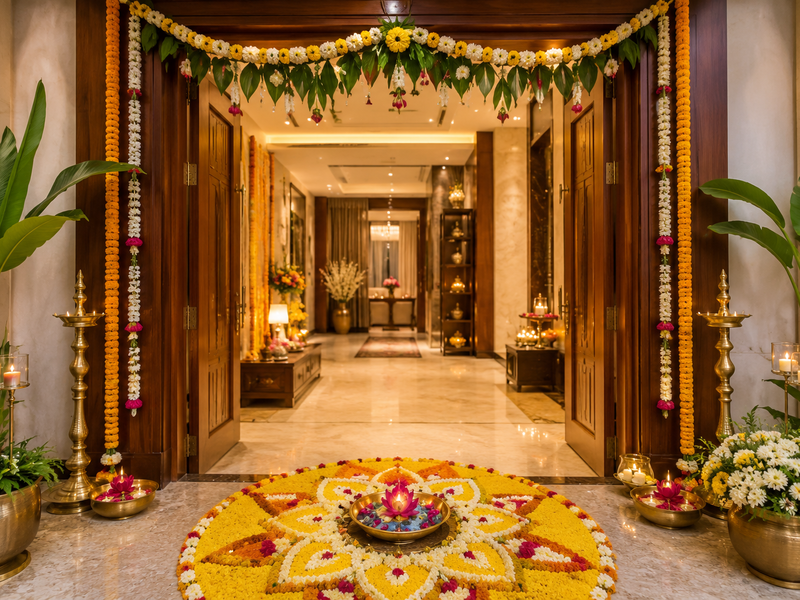
The entrance of a home holds special significance in Indian culture. It is considered the gateway through which guests, blessings, and positive energy enter the property. For this reason, entrance decoration often becomes one of the most important aspects of house warming decoration.
A beautifully decorated entrance creates a welcoming first impression and sets the tone for the entire celebration. Traditional Indian homes often feature floral garlands draped around door frames. Marigolds are particularly popular because they symbolise positivity and good fortune. Their bright colours create a festive atmosphere while maintaining strong cultural significance.
Mango leaf torans are another traditional decorative feature commonly seen at house warming ceremonies. These leaf arrangements are hung above entrances and are believed to attract prosperity while protecting the household from negative influences. Their presence reflects centuries of cultural tradition and continues to be an important decorative element in many Indian celebrations.
Rangoli designs placed near the entrance further enhance the welcoming atmosphere. These intricate patterns are created using coloured powders, flower petals, rice flour, or natural materials. The designs often include traditional symbols such as lotus flowers, peacocks, geometric patterns, and sacred motifs. Beyond their visual beauty, rangoli designs are believed to invite good fortune and blessings into the home.
Brass lamps placed at the entrance add elegance and spiritual significance. The gentle glow of these lamps creates a sense of warmth and tranquillity while symbolising the victory of light over darkness. Combined with flowers and rangoli, they create a visually striking entrance that honours Indian traditions.
In modern homes, entrance decoration may also incorporate contemporary elements such as decorative stands, floral arches, and personalised welcome displays. When combined thoughtfully with traditional décor, these additions create a sophisticated yet culturally meaningful appearance.
The Role of Flowers in Traditional House Warming Decoration
Flowers are among the most cherished elements of Indian house warming decoration. Their beauty, fragrance, and symbolism make them an essential part of Griha Pravesh celebrations. Across different regions of India, flowers are used to decorate entrances, prayer areas, living spaces, and ceremonial backdrops.
Marigolds remain one of the most widely used flowers in traditional decoration. Their bright orange and yellow hues are associated with happiness, prosperity, and positive energy. Marigold garlands are often draped around doorways, windows, staircases, and decorative structures to create a festive atmosphere.
Jasmine flowers hold special significance because of their delicate fragrance and association with purity. They are commonly used in floral arrangements and decorative strings that enhance both the appearance and ambience of the celebration. The scent of jasmine helps create a peaceful and welcoming environment throughout the home.
Rose petals are frequently incorporated into decorative displays and rangoli designs. Their rich colours add elegance and sophistication while symbolising love and joy. Many families also use rose petals to decorate pathways leading to prayer areas or ceremonial spaces.
Lotus flowers are particularly meaningful in Indian culture because they symbolise purity, spiritual growth, and divine blessings. Although not always used extensively due to availability, they are often included in religious ceremonies and decorative displays where possible.
Modern house warming decoration often combines traditional flowers with contemporary floral arrangements. Orchids, lilies, and carnations may be incorporated alongside marigolds and jasmine to create a more refined appearance while preserving cultural authenticity.
Fresh flowers also offer practical benefits beyond aesthetics. Their natural fragrance helps create a pleasant atmosphere without artificial scents. Their vibrant colours enhance the visual appeal of photographs and contribute to a festive mood that guests appreciate.
Rangoli and Cultural Art Forms That Enhance the Celebration
Few decorative traditions are as closely associated with Indian celebrations as rangoli. This ancient art form continues to play an important role in house warming decoration because it combines creativity, symbolism, and cultural heritage.
Traditionally created near entrances, rangoli designs serve as visual expressions of welcome and prosperity. The patterns often feature sacred symbols, floral motifs, and geometric shapes that reflect regional artistic traditions. Some families choose simple designs, while others create elaborate artworks that become focal points of the celebration.
Flower rangoli has become increasingly popular in recent years. Instead of coloured powders, fresh flower petals are used to create intricate designs. This approach combines the beauty of floral decoration with the cultural significance of rangoli, resulting in displays that are both elegant and meaningful.
Regional variations add further richness to house warming decoration. Different parts of India have their own traditional floor art styles, each reflecting local customs and artistic influences. Incorporating these regional traditions can add a personal touch while celebrating cultural diversity.
Children and younger family members often participate in creating rangoli designs, making the activity an enjoyable part of the preparation process. This involvement helps pass cultural traditions to future generations while encouraging creativity and family interaction.
As modern homeowners look for unique ways to celebrate their Griha Pravesh, rangoli remains one of the most effective ways to honour tradition while adding visual impact to the event.
Traditional Lighting Ideas That Create Warmth and Positivity
Lighting plays a central role in Indian celebrations, and house warming decoration is no exception. Traditional lighting not only enhances visual appeal but also carries deep symbolic meaning.
Diyas are perhaps the most recognisable form of traditional lighting. These small oil lamps have been used for centuries during religious ceremonies and festive occasions. Their gentle glow symbolises knowledge, positivity, and the removal of darkness. Placing diyas throughout the home creates a peaceful and welcoming atmosphere.
Brass lamps are another important decorative element. Often positioned near prayer areas or entrances, these elegant lamps serve both decorative and ceremonial purposes. Their timeless appearance complements traditional décor while reinforcing the spiritual significance of the event.
Candle arrangements can also be incorporated into traditional house warming decoration. When combined with flowers and decorative holders, candles create soft ambient lighting that enhances the overall atmosphere of the celebration.
Many modern homeowners choose to combine traditional lighting with contemporary options such as warm LED lights and decorative lanterns. This combination creates a balanced aesthetic that feels both traditional and contemporary.
Lighting can also be used strategically to highlight key decorative features such as floral displays, rangoli designs, and ceremonial backdrops. Thoughtful lighting enhances the visual impact of these elements while contributing to a warm and inviting environment.
Blending Traditional and Modern House Warming Decoration Ideas
Today’s homeowners often seek a balance between cultural heritage and contemporary design. Traditional house warming decoration can be adapted to modern spaces without losing its authenticity or significance.
One effective approach is to focus on a few key traditional elements rather than decorating every corner of the home. A striking floral entrance, a beautifully designed rangoli, and an elegant prayer area can create a powerful visual impact while maintaining simplicity.
Modern colour palettes can also complement traditional decoration. While vibrant colours remain popular, many homeowners choose softer tones that blend more naturally with contemporary interiors. This creates a sophisticated appearance while preserving cultural symbolism.
Personalisation has become an important trend in house warming decoration. Families often include decorative elements that reflect their values, interests, or family traditions. These personalised touches help create a celebration that feels unique and meaningful.
Photography has also influenced decoration choices. Many homeowners design specific areas that provide attractive backgrounds for family photographs. Traditional décor elements such as floral installations, decorative swings, and ceremonial displays often become focal points for capturing memories.
Sustainability is another growing consideration. Many families prefer natural materials, reusable decorations, and environmentally friendly options that align with traditional values while reducing waste. Fresh flowers, earthen lamps, and biodegradable decorative materials remain popular choices for this reason.
Traditional Indian house warming decoration continues to inspire homeowners because it offers far more than visual beauty. It creates a connection between past and present, honours cultural heritage, and helps transform a new property into a welcoming home filled with positivity and celebration. By embracing meaningful decorative elements such as flowers, rangoli, lamps, and cultural symbols, families can create memorable Griha Pravesh celebrations that reflect both tradition and personal style. As trends evolve and homes become more modern, the timeless appeal of traditional Indian decoration remains as relevant and cherished as ever.
At Kala Kriti Events, we create elegant and culturally inspired House Warming Decoration services that bring warmth, positivity, and festive charm to your new home celebration. We thoughtfully design every decorative detail, from traditional floral arrangements and rangoli to entrance décor and ceremonial setups, helping make your Griha Pravesh truly memorable. Our focus is to blend Indian traditions with beautiful aesthetics, creating a welcoming atmosphere for your family and guests.